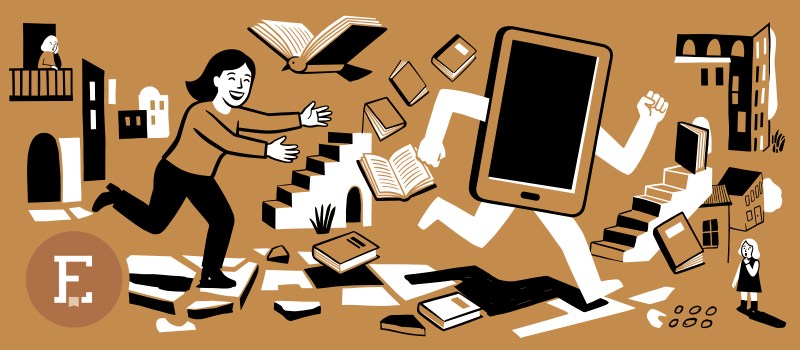
Infographics are one of the greatest and most entertaining ways of sharing facts, numbers, mechanisms, and ideas.
[ef-archive number=2 tag=”lists” ]
Lost of interesting infographics were published in 2016, but we see a shift in the areas of interest.
The year 2015 belonged to infographics that were highlighting characters, objects, props, or quotes from the works of literature.
In 2016, more and more visuals were created not with facts from books, but about books and reading.
A single topic with the biggest number of visualizations in the past year is reading. The benefits of reading books, reading around the world, how reading affects the brain and body. You’ll see a couple of examples in the list below.
Click or tap on each infographic to open it in full resolution. Make sure to follow the credit links to find the source of the infographic, and read more details about it.
As this post includes large image files, it may load a bit slower than usual.
Are there any infographics that we’ve missed? Please share them in the comments below. Thanks!
[ef-reco id=”96745″ title=”Read also” info=”Top article”]
11 best book and library infographics of 2016
1. Inspirational quotes from fictional teachers

It was one of the most shared book-related infographics in 2016.
Released by Playground Equipment, it lists quotes from fictional teachers, mentors, and guides.
You’ll meet here Gandalf the Grey from The Lord of the Rings, Albus Dumbledore (Harry Potter), or The Fairy Godmother from Cinderella. “Just as they provided unique insights to their pupils, their words can also enlighten us no matter where we are or where we are headed.”
2. Librarian of the near future

Nowadays, librarians not only follow but are ahead of changes forced by the development of the digital world.
McGraw-Hill Education has released an infographic that presents recent facts and figures about how libraries and librarians can be at the forefront of digital innovation.
3. How the world reads

In 2016, several infographics about reading were published. This one comes from contact lenses producer Feel Good, and is one of the most useful visuals on that topic.
It includes info about which country loves to read most, bestselling books of all time, banned books, and fun facts.
4. The ultimate English grammar cheat sheet

This is one of the most useful English grammar infographics we’ve seen so far.
Instead of just showing bad vs. good usage, the visual describes in plain text the cases where most mistakes are being made.
Prepared by a student accommodation site Urbanest, the infographic will let you go through the grammar, spelling, and punctuation examples.
5. How reading improves your body and mind

The infographic, developed by The Expert Editor, presents fourteen different ways reading can improve the brain and body.
“Science has shown that reading has some amazing health benefits, including helping with depression, cutting stress, and reducing the chances of developing Alzheimer’s later in life.”
6. Books with more characters than you can keep track of

How many characters in a single book are you able to track without getting lost?
There are 40 named characters in Harper Lee’s To Kill a Mockingbird. Compare that to 218 characters that were created by George R.R. Martin in A Game of Thrones, the first volume of A Song of Ice and Fire saga.
7. The most beautiful libraries in the world

Libraries, not only the old but also the modern ones, are among places many book lovers dream to see for their own eyes.
In the infographic released by Queensland Assignment, you’ll see The Reading Room of the Trinity College Library in Dublin, but also the Stuttgart City Library, or Biblioteca José Vasconcelos.
8. The reading habits of successful people

88% of wealthy people read at least half an hour a day. The average CEO reads 60 or more books a year. 94% of wealthy people read about current events, but only 11% spend their time reading for entertainment.
You’ll find more facts and figures in the infographic developed by Fresh Essays.
The visual includes also the “reading profiles” of most successful people: what time a day they read, what categories they prefer, and what are their favorite books.
9. Trends in book discovery

Consumer Insights Team at Penguin Random House has recently polled more than 40,000 readers looking for factors influencing book discovery and buying choices.
It’s recommendations from family and friends that are most influential when deciding which book to read next. When you take a look at other sources of book recommendations, you’ll see that it’s mostly about social media.
10. Seven steps to read faster and learn more

Blinkist has released in 2016 an insightful post and infographic with tips for smarter and faster reading.
The tips are in fact the super concise conclusions from a few non-fiction books – must-reads for everyone who wants to be more effective in both work and private life.
“When presented with new concepts, it’s our own curiosity that awakens an attitude of awe—which is great, because that awe primes our brains to learn.”
11. How to read 100 books a year

For many people, the goal to read 52 books per year seems to be a big challenge. But you can do more.
Darius Foroux, the founder of Procrastinate Zero and the author of Massive Life Success, has a piece of advice on how to read 100 books a year.
“If you read 10 hours a week, you’ll read 26,000 pages a year. Let’s say the average book you read is 250 pages: In this scenario, you’ll read 104 books in a year.”
• • •
To get more posts like this, please subscribe by RSS or email. Let’s also connect on Facebook, Twitter, and Pinterest.
More to explore:
[ef-archive number=5 tag=”lists”]